Texas Beats UConn – Sideout Play
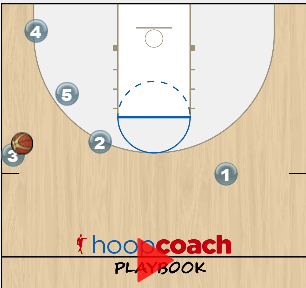
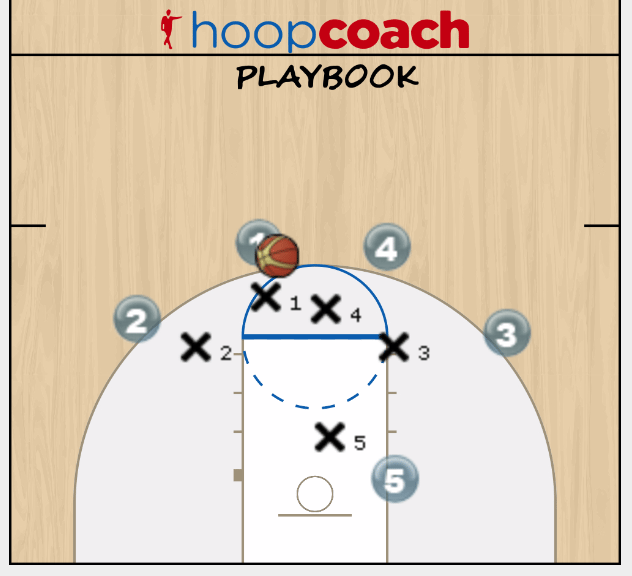
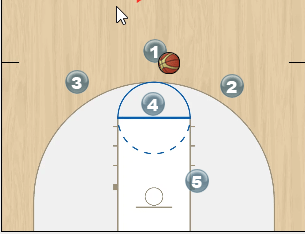
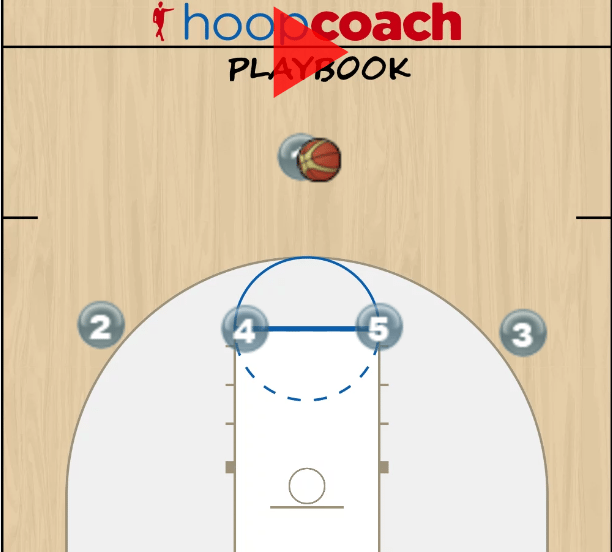
On November 30, 2014, Texas ran a sideline out of bounds play (SLOB) to beat UConn 55–54 on the road. The set produced a wide-open corner three from Jonathan Holmes with the game on the line. Below is a concise breakdown of the action shown in the play animation, the read that makes it work, and how to install it with your own team.
The play, in short
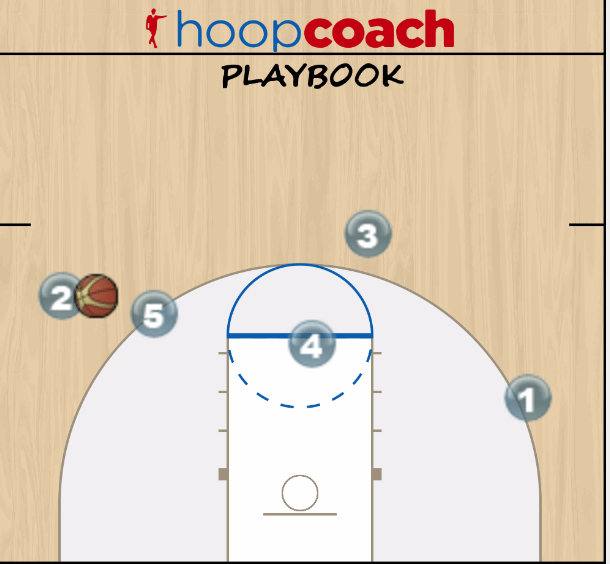
This is a two-option sideline out of bounds play run from a stack on the ball side. The inbounder reads the defense from the sideline and hits whichever option the defense gives up first.
- Option 1 (rim): The post slips a screen and dives straight to the basket for a layup or lob. If the rim defender steps up to help, this is the first look.
- Option 2 (corner three): A teammate sets a back screen for the shooter, who curls or pops out to the corner. If the defense switches or gets caught on the screen, the shooter is open for a catch-and-shoot three.
- Safety: The point guard spaces to the weak side as an outlet if neither option is there, so the inbounder never gets stuck.
The key coaching detail: the two options attack two different areas at once — the rim and the corner. The defense cannot take away both, so the inbounder simply reads and delivers.
Step-by-step execution
- Alignment. Set up in a stack on the ball side of the floor, with the inbounder on the sideline and the point guard spaced away on the weak side.
- First action — the slip. The post fakes a screen for the shooter, then slips hard to the rim. This is the primary look; a defender who cheats toward the shooter gives up an easy basket.
- Second action — the back screen. As the post slips, a wing sets a back screen on the shooter’s defender. The shooter reads the screen and relocates to the corner.
- The read. The inbounder waits a beat. If the rim is open, hit the slipping post. If the defense sinks to protect the rim, the shooter is open in the corner.
- The shot. The inbounder delivers to the corner, and the shooter catches and shoots. A big man stays near the basket for a possible rebound and put-back if the shot misses.
Why it works
The strength of this SLOB is that it forces a defensive choice under time pressure. Late-game inbounds defenses often plan to switch every screen to avoid getting beaten off a cut. This play punishes exactly that plan: the slip beats a switch that helps too early, and the back screen beats a switch that arrives too late. When defenders communicate poorly on the switch — or one simply gets caught on the screen — the shooter walks into an open look.
Coaching points to emphasize in practice:
- Sell the first screen. The slip only works if the post’s screening angle looks real long enough to hold the rim defender for a count.
- Screen the defender, not a spot. The back screen has to make contact with the shooter’s man, not just occupy space, or the switch recovers in time.
- Inbounder patience. The most common mistake is rushing the pass to the first option before the read develops. Teach the passer to hold the ball and let the actions play out.
- Crash the glass. Keeping a big near the rim turns a missed shot into a second chance, which is why this set has a high floor even when the primary looks are covered.
A note on the concept: the “lollipop” action
Texas ran variations of this same idea more than once that season. On a similar late-game set, the shooter screens first and the point guard comes off to the corner; when the defense keys on the point guard and switches, the original screener slips to the ball for the open shot instead. The lesson for coaches is that the framework — a slip plus a back screen, with an inbounder reading the switch — can be run to either a shooter or a guard depending on how the defense reacts. Building one base action with two finishers gives you a counter without teaching a second play.
Check out the animation for the Texas beats UConn sideline out of bounds play.