Illinois Man Set: 3 Scoring Options in One Play
If you’re looking for a man-to-man set that doesn’t just create one shot but reads the defense and gives your team three different ways to score, Illinois is worth adding to the playbook. It’s a simple entry with a layered set of actions — a slip, a cross screen, and a double screen — that forces the defense to make a decision on nearly every pass. Below is a full breakdown using the animation, action by action.
The Initial Alignment
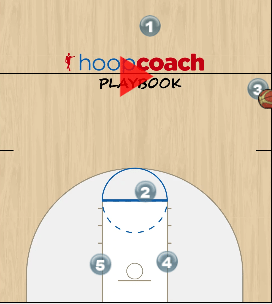
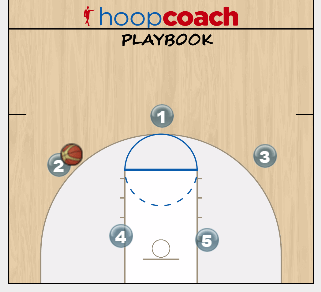
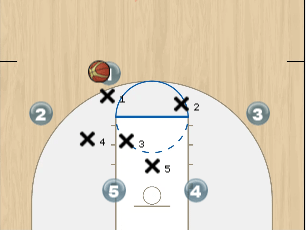
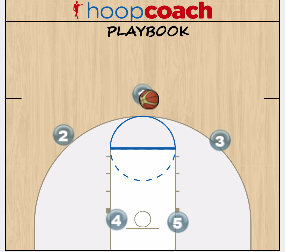
Illinois starts out of a standard alignment: the 1 brings the ball up top, with the 2 and 3 spread to the wings and the 4 and 5 anchored inside. Nothing about the setup tips off what’s coming — which is exactly the point. The first pass out of the top sets the whole sequence in motion.
Option 1: The Slip for the 4
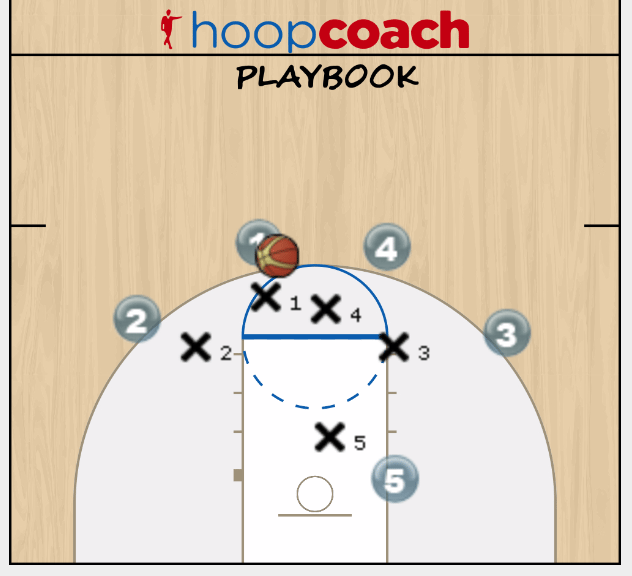
As the ball moves, the 4 starts to set what looks like a routine screen — then slips it early, cutting hard to the rim before the defender can get through or over the top. This is the play’s first scoring look, and it’s built specifically to punish defenses that “cheat” screens by going under or switching too early. If the 4’s defender jumps the screen assuming it’s coming, the slip leaves him wide open on the catch.
Option 2: The Cross Screen for the 5
If the slip isn’t there, the action continues into a cross screen for the 5 — a baseline screen that seals the post defender and creates deep post position on the opposite block. This is the play’s interior answer: if the defense has sold out to stop guard actions on the perimeter, the cross screen turns Illinois into a straightforward post-up with good position and a size mismatch, if you’ve got one.
Option 3: The Double Screen for the Guard
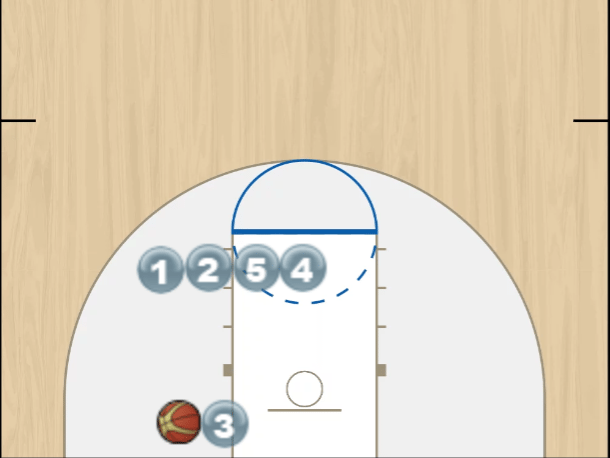
The last option is the one most teams will recognize as the “money” look: a double screen — two screeners set side by side or staggered — springing a guard free off the catch for a clean perimeter jumper. This is the release valve if the first two options are covered. By the time the guard comes off the double, the defense has already had to defend a slip and a post seal, which is exactly when help defenders are most likely to be a beat late rotating.
Coaching Points
- Run it against teams that switch everything. The slip specifically punishes switching or under-defending on the first screen.
- Sequence matters. Illinois works because it presents three reads in order — teach your players to go through the progression rather than locking onto one option every time.
- Good end-of-quarter or half-court set piece. Because it has three built-in outlets, it’s a safe call when you need a shot but aren’t sure which defender is going to be the weak link that possession.
Watch the Full Animation
The clearest way to see how the timing works is to watch the play run. [Embed the Illinois animation here] — pay close attention to how tight the window is between the slip and the cross screen; that timing is what makes the third option (the double screen) actually open, instead of the defense having time to reset.
Take a look at the animation for Illinois – Man Set to get an idea of where the multiple scoring options present themselves.