
An Honest Note to Travel Basketball Parents
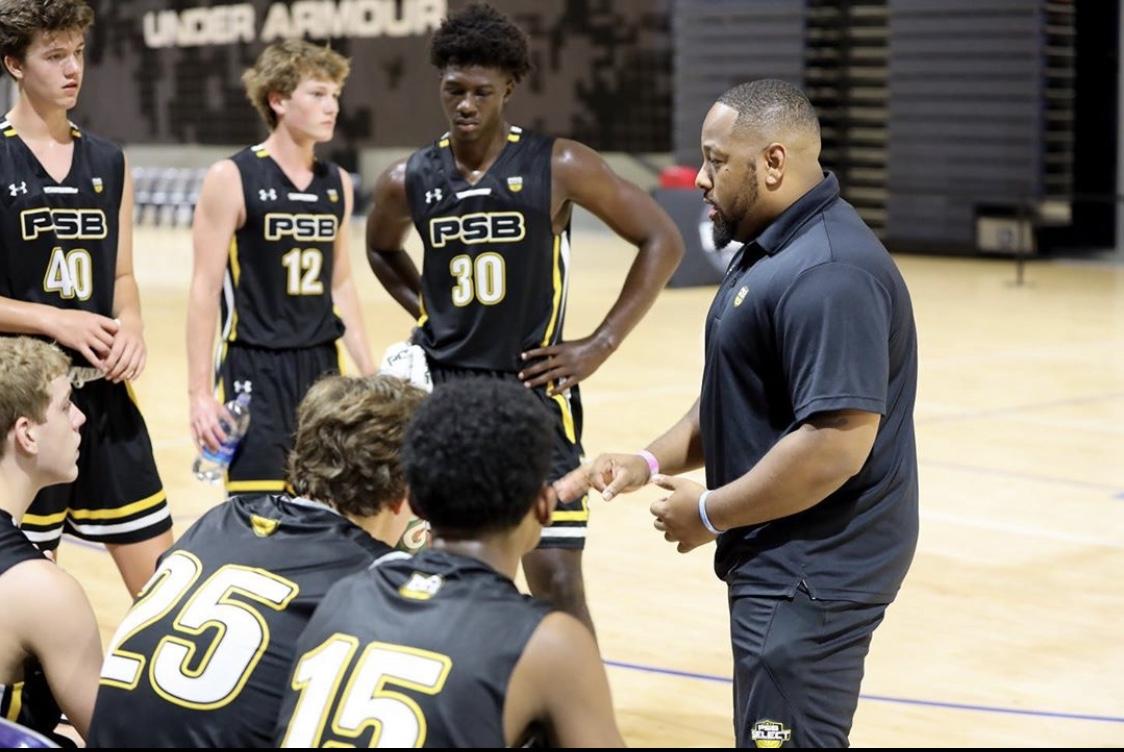
Every spring and/or fall, parents ask the same question: “Which travel team should my child play for to get recruited?”
The honest answer: the circuit matters less than most people think, and more than they’d like it to. Here’s what each level actually offers.
First, how college coaches recruit. Travel ball is usually where coaches confirm a player, not where they discover one. By the time a coach is sitting courtside in July, they’ve often already watched film, talked to the high school coach, and seen the player in the winter. The spring and summer gyms are where they find out if what they saw holds up against better competition.
The Shoe Circuits: Nike EYBL, Adidas 3SSB, Under Armour, Puma Pro16, New Balance P32
This is the top of the grassroots world. The benefits are real: the best competition every single game, nearly every high-major staff in the building, free gear, and a schedule that makes it easy for coaches to plan around. Playing next to other elite players also teaches a player how to fit into a role, which is exactly what college demands.
The honest part: if your child is the ninth player off the bench getting eight minutes a game, the most-watched gym in America doesn’t help. Coaches can’t evaluate what they don’t see. EYBL is still the deepest, with 3SSB and Under Armour close behind. Puma and New Balance are newer, and that can work in a player’s favor: a good player can be featured there, and coaches are showing up.
The Secondary Shoe Circuits: EYCL, Adidas Gold Gauntlet, UA Rise, Puma NXTPRO
These are underrated. Players still get sponsorship and solid coach attendance, but with more touches and more responsibility. For a lot of mid-major and Division II prospects, this is the sweet spot. Some of these also offer a path up into the top tier if a program performs.
Independent and National Exposure Circuits: Made Hoops, Grassroots 365, Prep Circuit, Hoop Group, and others
This is where a lot of college basketball actually recruits. Mid-major, low-major, D2, D3, NAIA, and junior college staffs know they won’t win battles for the players every power program wants. They go where they can find value, and that’s often here. Your child will likely play a featured role, which means more film and more chances to show what they can do.
The catch: quality varies a lot. Some events draw dozens of college staffs. Others are “exposure” events where the exposure is mostly to other parents. Before you pay, ask which college programs attended last year.
Regional and Local Travel Teams
For middle schoolers and freshmen, this is often the right level, and nobody says that enough. Players get reps, development, lower cost, less travel, time for other sports, and a life outside basketball. Very few college coaches will see these games. At 13, that’s fine. The kids getting real attention that young would get it anywhere.
What Every Parent Should Know
- Minutes beat logos. A starter on an independent team gets seen more than a bench player on a shoe-circuit team.
- Development happens in practice, not tournaments. Sixty summer games with no practice won’t make your child better. Ask how often the team actually trains.
- The high school season still matters. Many D2, D3, and NAIA programs recruit heavily off winter play.
- Ask the program director where the last few classes went to college. Then ask if they actually call college coaches. Relationships matter.
- Grades open doors. Academic D3 and high-academic D1 schools are real, great options, and a transcript can put your child on lists that talent alone won’t.
- Send film. One good highlight clip plus a full game. College coaches do watch it.
- Be honest about your child’s level. The best fit is a team where they’re challenged but still playing a real role.
The Bottom Line
The right circuit is the one where your child plays meaningful minutes, against competition that stretches them, for a coach who develops them and speaks up for them. If they’re good enough, college coaches will find them. Finding players is their whole job.


