Breakdown of the Continuity Screen the Screener Offense (Offset Flex)
The Continuity Screen the Screener Offense is a highly structured man-to-man basketball offense. Operating similarly to an offset Flex offense, this system relies on continuous off-ball motion and multiple layers of screening to force defensive breakdowns. It is particularly effective for teams with cerebral personnel who can read defensive coverages, and it provides a distinct advantage if your guards possess the height to exploit switching defenses in the paint.
Flow
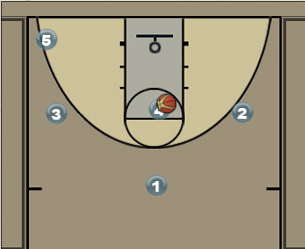
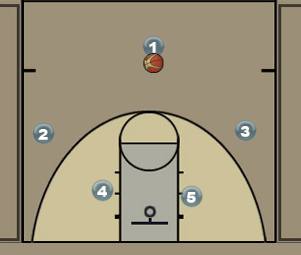
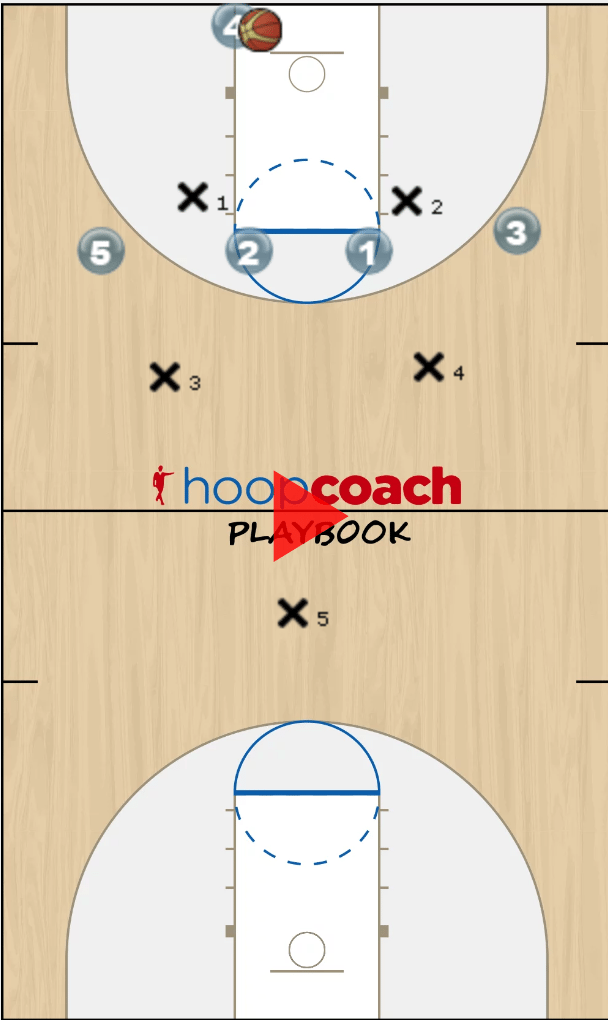
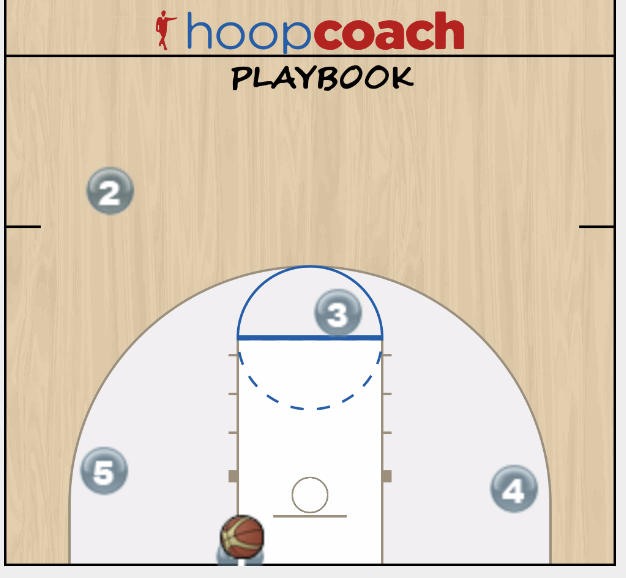
The provided animation illustrates the foundational setup and entry pass that triggers the continuity motion. Here is a breakdown of the first three frames:
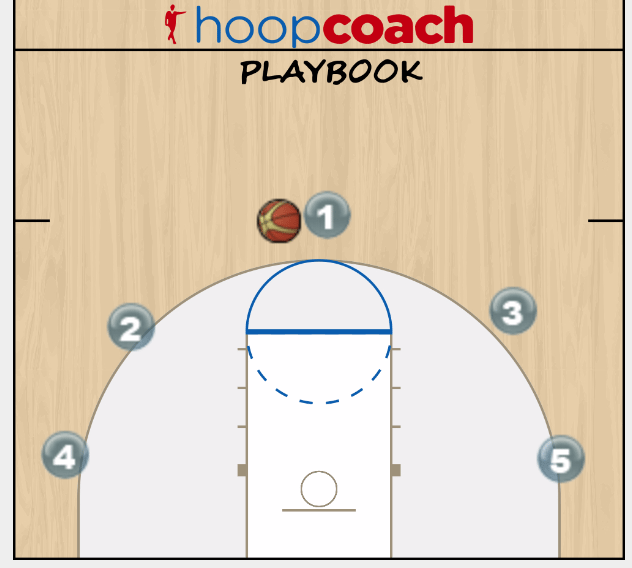
- The Initial Set (Offset Spacing): The offense begins in an unbalanced, offset formation. Player 1 (the point guard) controls the ball at the top of the key. The right side of the floor is spaced out with Player 2 on the wing and Player 3 deep in the corner. On the weak side (left side), the interior players are stacked: Player 5 is positioned at the high post/elbow, and Player 4 is anchored on the low block.
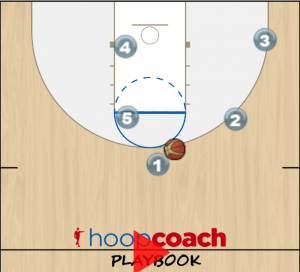
- The Wing Entry Pass: The offensive sequence is initiated when Player 1 makes a direct entry pass to Player 2 on the right wing. In continuity offenses, this wing entry is the standard trigger that tells the off-ball players to begin their primary screening actions.
- Initiating the Motion: As Player 2 secures the possession, the spacing is set for the “Screen the Screener” (STS) action to unfold. While the animation pauses here, this alignment dictates the next immediate steps: Player 1 will begin moving away from the ball to initiate the offensive flow. Typically, in an offset Flex or STS continuity, this setup leads to a weak-side player setting a cross-screen in the paint, followed immediately by that screener receiving a down screen from a teammate at the high post (Player 5).
Core Concepts of the Offense
Positional Versatility: Because the continuity forces all five players to rotate through various spots on the floor, guards will frequently find themselves setting cross-screens in the low post or operating off the block. Having larger, physical guards who can navigate the interior makes this offense incredibly difficult to disrupt.
The “Screen the Screener” Advantage: The foundational philosophy of this play is that the player who sets the initial screen is instantly rewarded by receiving a second screen. This makes it incredibly difficult for the defense to effectively execute help-and-recover or switching principles, as the defender caught helping on the first action is immediately picked off by the second screen.
Offset Flex Principles: By utilizing an offset alignment rather than a traditional 4-out or 1-4 high set, the offense creates a strong-side overload. This shifts the defense’s help-side responsibilities, creating vulnerabilities in the paint when the ball is eventually reversed.
Click the link to view the Continuity Screen the Screener Offense animation and decide for yourself