Flex Maryland Pattern: Continuity Motion Offense Breakdown
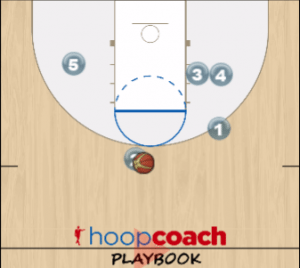
Found this in the plays library. I am not familiar enough with Gary William’s offense to confirm whether or not he did run his Flex offense in this manner but, regardless, it is worth looking at if you are a Flex coach.
The Flex Maryland Pattern is a structured continuity offense designed to create high-percentage scoring opportunities through baseline screening and player movement. This pattern, often associated with the coaching style of Gary Williams, relies on precise spacing, timing, and reading the defense to maintain constant pressure on the rim.
Flow
Based on the playbook sequence, the play unfolds through a continuous loop:
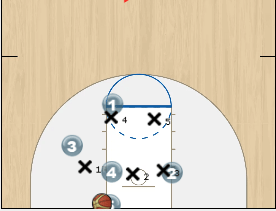
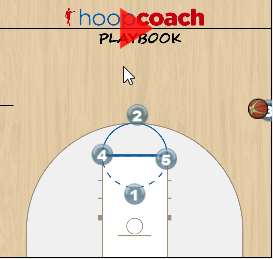
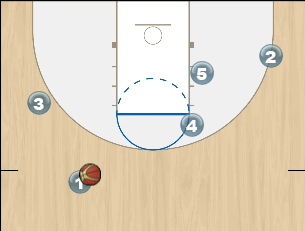
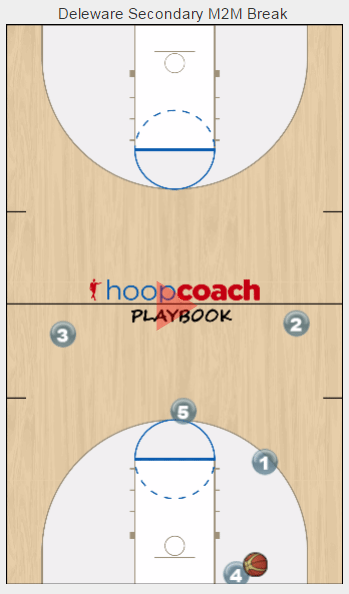
- Initial Alignment: The offense sets up in a 1-4 High formation. Player 1 brings the ball to the top of the key, players 2 and 3 start on the low blocks, and players 4 and 5 position themselves at the high posts.
- Entry Pass: Player 1 initiates the offense by passing the ball to player 2 on the wing.
- The Flex Cut: Player 5 sets a cross-screen for player 3 along the baseline. Player 3 utilizes this screen to cut across the lane toward the ball-side block, looking for an entry pass.
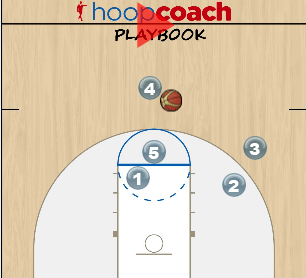
- Rotation and Clearing: If the entry pass is not available, player 3 clears out to the corner. Player 1 cuts hard to the basket, then rotates out to the weak-side corner to maintain floor spacing.
- Ball Reversal: The ball is reversed to player 4 at the top of the key.
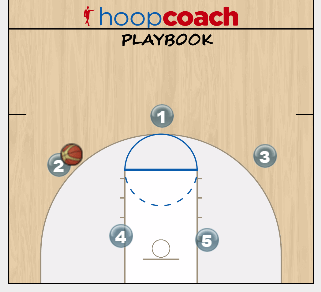
- Second Side Continuity: The pattern repeats on the opposite side. Player 5 sets a baseline screen for player 2, who cuts across the lane to the ball-side block.
- Finishing the Play: Player 4 passes to player 2 on the block for a layup or post-entry opportunity.
Key Coaching Points
Patience: The strength of the Maryland Flex pattern lies in its continuity. If the first cut is defended well, players must be disciplined enough to reverse the ball and execute the pattern on the second side rather than forcing a contested shot.
Spacing: Maintaining the 1-4 High spacing is critical. If players drift too close to the ball, the passing lanes clog, making the flex cuts ineffective.
Screening Angles: The screens must be set parallel to the baseline to force defenders to navigate around the screener, creating open lanes for the cutters.
View the animation of the Flex Maryland Pattern