Marquette | Back Screening Offense
Man Offense with a mix of back screens and UCLA cuts/screens. Good offense if you want to “grind it out”
The Marquette back screening offense is a half-court execution system designed to counter aggressive man-to-man defenses. It relies on a tactical blend of back screens and UCLA cuts rather than quick perimeter transitions or isolation plays.
This configuration is highly effective for teams that prefer a disciplined, high-possession approach to “grind it out” against physical opponents. By forcing defenders to navigate consecutive interior screens away from the ball, the system creates systemic breakdowns in defensive coverage, leading to interior mismatches and high-percentage scoring opportunities near the basket.
Play Breakdown
The following breakdown explains the initial movement pattern and screening infrastructure demonstrated in the early stages of the playbook sequence:
Phase 1: Initial Set
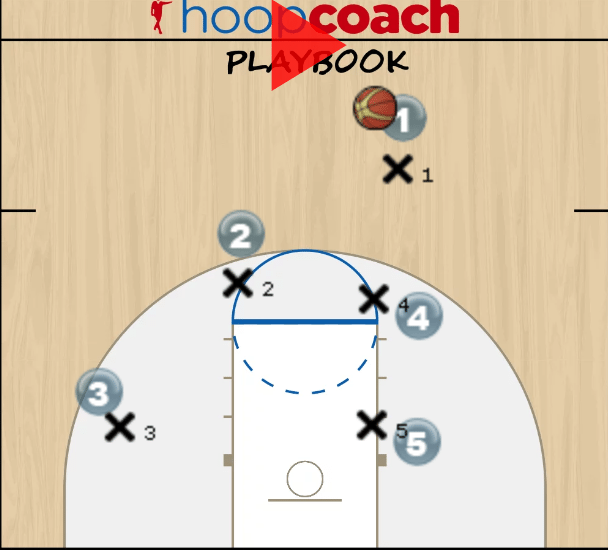
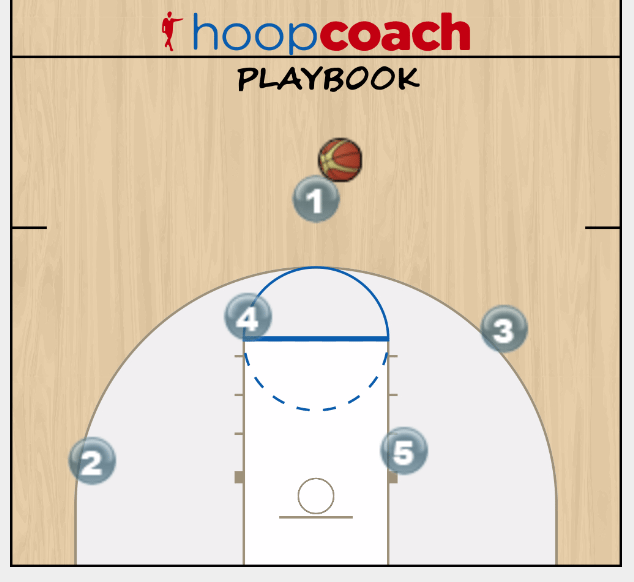
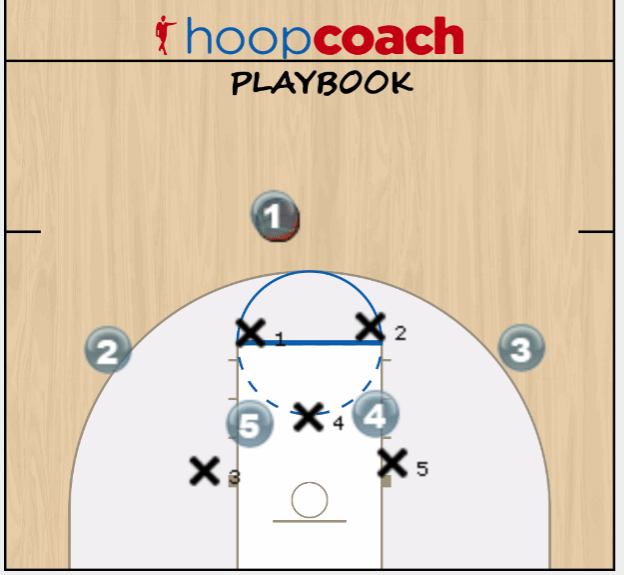
- The Formation: The offense begins in a balanced half-court alignment. Player 1 handles the ball at the top of the key to quarterback the set.
- Perimeter and Post Spacing: Players 4 and 5 occupy wide positions on the left and right wings near the free-throw line extended. Players 2 and 3 start on the low blocks, establishing an empty paint area.
Phase 2: Inward Wing Diagonals
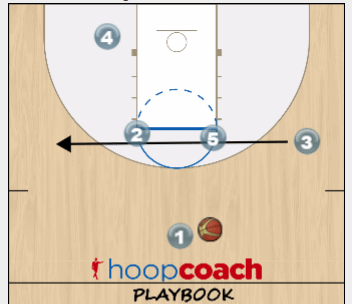
- The Dive Cut: To trigger the action, the wing players (4 and 5) abruptly leave the perimeter and dive hard toward the paint.
- Defensive Manipulation: This synchronized inward movement forces the wing defenders to track down into the key, narrowing the defensive shell and setting up the subsequent screening angles.
Phase 3: Screening Infrastructure
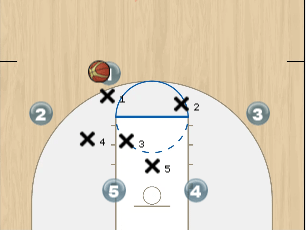
- The Convergence: Players 4 and 5 arrive at the low blocks, converging directly with the post players (2 and 3).
- Establishing the Screen: This physical positioning initiates the back-screening and UCLA cut sequence. The diving perimeter players lock into stationary positions to screen the defenders of the post players, setting up a physical, high-execution cycle designed to free up an interior cutter or open a clean lane for a post entry.
Teaching Points
To successfully implement the Marquette back screening offense, prioritize these three fundamental execution details:
- Tight Cut Proximity: Players moving off the back screens must cut as tightly to the screener’s shoulder as possible. Leaving any gap allows physical man-to-man defenders to slip through the screen and blow up the play.
- Pace and Guard Patience: The point guard (Player 1) must remain highly patient at the top of the key. Rushing the pass before the interior screens are firmly set will result in deflections or offensive fouls.
- Screening Separation: The wings (4 and 5) must wide-stance their screens near the block. Forcing the defense to navigate a wide base inside the paint maximizes the probability of generating a defensive switch or an open baseline layup.
View the animation of Marquette a Back Screening Offense