Zone Offense Breakdown: Utilizing Post Players for Ball Reversal
Summary
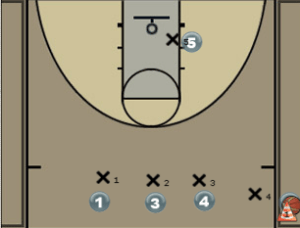
This zone offense focuses on distorting a standard 2-3 zone defense by incorporating low-post players into perimeter ball reversal. The action initiates with the point guard dribbling toward a wing to draw the top line of the defense and compress the zone. Upon passing to the wing, the weak-side low-post player flashes upward to the high post or pops directly beyond the three-point arc. This movement establishes an immediate passing hub at the top of the key, allowing the offense to quickly reverse the ball to the opposite wing before the defensive zone can shift and recover.
Initial Set
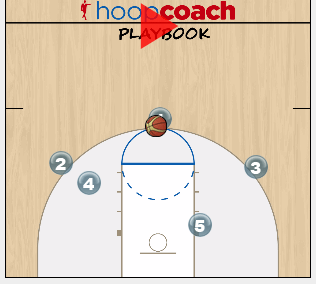
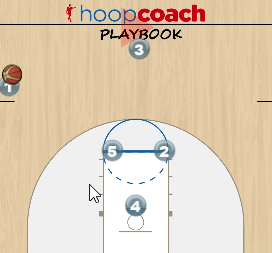
The team aligns in a 1-2-2 formation. Player 1 (Point Guard) controls the ball at the top of the key. Players 2 and 3 occupy the left and right wings. Players 5 and 4 start low, positioned on the blocks or in the short corners.
The Flow
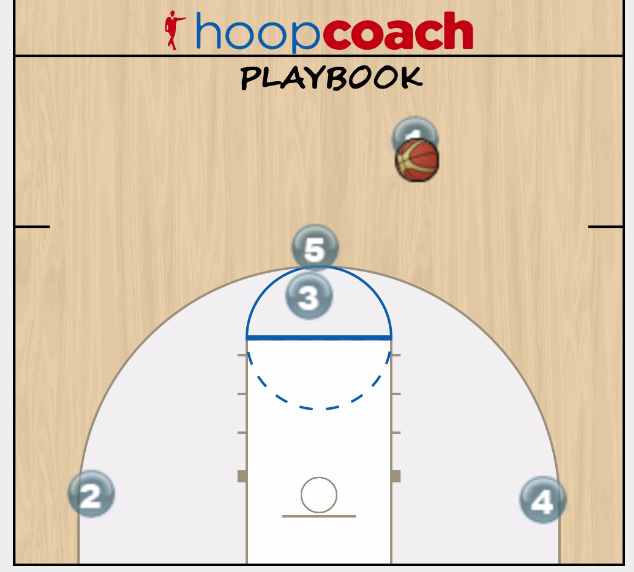
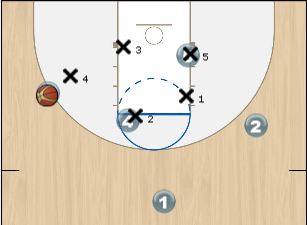
1. Dribble Entry and Defensive Compression The play begins with Player 1 dribbling toward one side of the perimeter (e.g., the left side). This lateral movement forces the top-left defender (X1) to commit to the ball handler. Simultaneously, the bottom-left defender (X4) must adjust its positioning to prepare for a potential pass down the sideline.
2. Wing Entry and Weak-Side Flash Player 1 passes to Player 2 on the wing. As X4 closes out on the ball, the middle defender (X3) is forced to slide low to prevent an easy pass to Player 5 on the low block. While the defense shifts toward the ball, the weak-side big man (Player 4) executes a hard cut from the opposite low block up toward the high-post and top-of-the-key area.
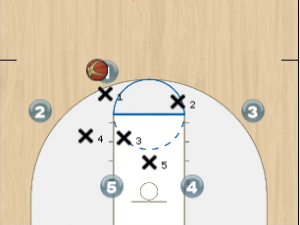
3. The Reversal Mechanism Player 4 utilizes one of two tactical variations depending on the positioning of the top line of the zone:
- High Post Pause: Player 4 pauses momentarily at the high post to look for a high-low passing option to Player 5 or an open mid-range shot.
- Perimeter Pop: Player 4 cuts directly beyond the three-point arc at the top of the key.
Once Player 2 passes to Player 4 at the top of the key, Player 4 immediately swings the ball to Player 3 on the opposite wing. Because the defense shifted heavily to cover the initial wing entry, Player 3 receives the ball with ample time to shoot, drive, or feed the post before the zone can recover.
Points of Emphasis
- Timing of the Post Flash: Player 4 must wait for Player 1 to commit the defense before initiating the upward cut. Moving too early allows the weak-side top defender (X2) to recognize the play and intercept the passing lane.
- Dribble Penetration Depth: Player 1 must engage the zone with intent. A shallow or passive dribble will not draw X1 far enough out of position, allowing them to drop back and disrupt the pass to the flashing big man.
- Pass Velocity: The reversal relies entirely on beating the defensive slide. Passes must be crisp and direct; lobbed or slow passes negate the spatial advantage created by the post player’s movement.
View the animation here.