Wisconsin Swing Offense Basics
The fundamentals of Coach Bo Ryan’s famous Wisconsin Swing Offense. Learn the 4-out, 1-in continuity rules, UCLA screens, and flex cuts to dominate the tempo and maximize high-percentage shots.
One of the most disciplined, frustrating-to-defend, and execution-heavy half-court systems you can implement is the legendary Wisconsin Swing Offense. Famously engineered and perfected by Coach Bo Ryan during his historic tenure with the Wisconsin Badgers, this basketball offensive strategy is built on fundamental spacing, constant cutting, and physical screening.
If you want a team that values every possession, takes high-percentage shots, and systematically breaks down aggressive man-to-man pressure, the basic pattern of the Swing Offense is your golden ticket.
Below is a complete tactical breakdown of the Wisconsin Swing Offense basics to help you implement this continuity system into your playbook.
Key Strategic Benefits of the Swing Offense
Before diving into the X’s and O’s, it is important to understand why this offense remains a favorite among intellectual coaches:
- Dictates and Controls Tempo: The Swing Offense is deliberate, utilizing multiple passes to wear out opposing defenses. It monopolizes control of the basketball, effectively neutralizing fast-break teams by forcing them to play at your pace.
- Generates High-Percentage Looks: By emphasizing ball movement, this system prioritizes high-quality layups, inside post-ups, and wide-open perimeter shots.
- Creates More Free Throw Opportunities: The heavy combination of baseline cuts, hard screens, and physical post entries naturally draws heavy defensive rotation and fouls.
- Interchangeable Personnel: This is an “equal opportunity” continuity offense. All five players must learn to handle the ball on the perimeter, cut off screens, and effectively post up inside, making defensive cross-matches a nightmare for your opponent.
The Fundamental Rules & Alignment
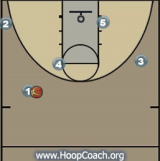
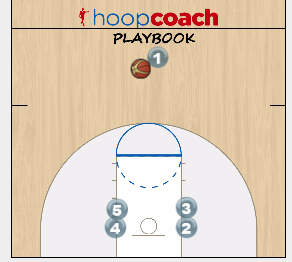
The basic blueprint of the Wisconsin Swing Offense establishes a balanced 4-out, 1-in alignment.
- The Slots: Two players occupy the top “slot” positions, aligning precisely with the lane lines extended.
- The Wings: Two players stand out wide on the wings, positioned at the free-throw line extended just outside the three-point arc.
- The Low Post: One player occupies the ball-side low block, positioning themselves slightly above the block to maintain a clean ball-side triangle.
Step-by-Step Breakdown of the Swing Continuity
The fundamental pattern of the Swing Offense functions as a synchronized wheel, repeating its actions seamlessly from one side of the floor to the other. Here is how the primary action unfolds:
Phase 1: The Slot-to-Wing Pass & UCLA Screen
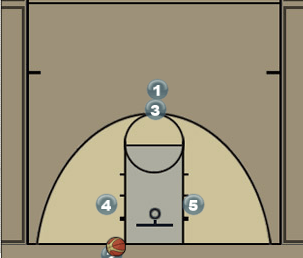
The continuity is initiated when a perimeter player in the top slot passes the ball down to the strong-side wing.
- The UCLA Cut: The moment this slot-to-wing pass is made, the low-post player immediately moves up to set a back-screen (UCLA up-screen) for the passer.
- The Basket Cut: The passer cuts hard off that screen directly to the low block, looking for an immediate post-up entry pass.
- Popping to the Slot: After setting the screen, the post player pops out to fill the vacant top slot position.
Phase 2: The Weak-Side Exchange
While the ball is sitting on the wing and the primary basket cut happens, the defense cannot simply sag and help.
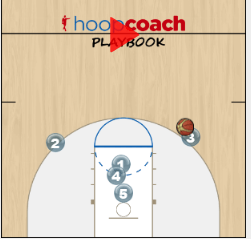
- Occupying Help Defenders: Concurrently, the two players on the weak side (the opposite slot and opposite wing) must execute a hard exchange of positions.
- The Threat to Score: This baseline/perimeter interchange occupies help-side defenders, preventing them from choking the paint and stopping your low-block cutter.
Phase 3: Ball Reversal & The Flex Cut
If the wing player cannot feed the ball into the low post, the ball must be “swung” to reverse the floor.
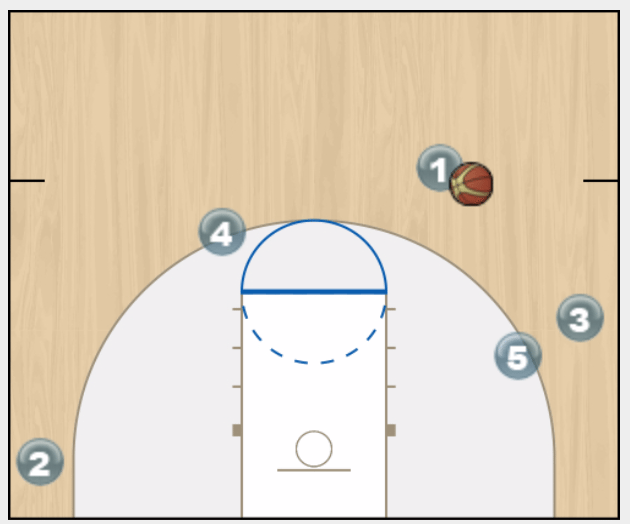
- The Slot Reversal: The wing player passes the ball back up to the recently vacated top slot. The ball is then quickly passed slot-to-slot to reverse the field of play.
- The Flex Screen: A slot-to-slot pass triggers an immediate flex action. The player who previously cut to the low block steps out to set a hard flex back-screen for the opposite wing player.
- The Baseline Cut: That weak-side wing player cuts hard across the lane off the flex screen toward the ball-side block, looking for a quick layup.
- Resetting the Continuity: The player who set the flex screen flashes to the high post or slot, rebuilding the 4-out, 1-in frame on the opposite side. The pattern then loops continuously.
Tips for Executing the Swing Offense
To make this offensive system truly lethal, your squad must master the finer details:
- Emphasize Ball Fakes: Because defenders will anticipate the ball swinging or entering the post, players must utilize aggressive ball fakes to shift defensive positioning.
- Take What the Defense Gives: Teach your cutters to read overplays. If a defender denies the slot-to-wing pass or tries to cheat under a screen, players should immediately reject the screen and back-cut hard to the rim.
- Demand Patience: This is not a fast-break, quick-hitting system. Your players must understand that the Swing Offense becomes most dangerous after the defense is forced to guard two, three, or four consecutive reversals.
By drilling these basic spacing guidelines, screens, and reversals, your team will dictate the pace of every single game, force mismatches, and systematically break down even the toughest man-to-man defenses on your schedule.
View the Animation or Download the PDF of the Wisconsin Swing Offense