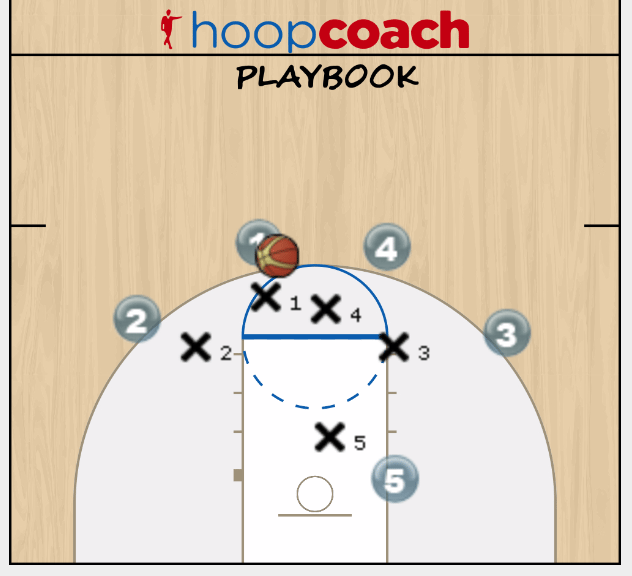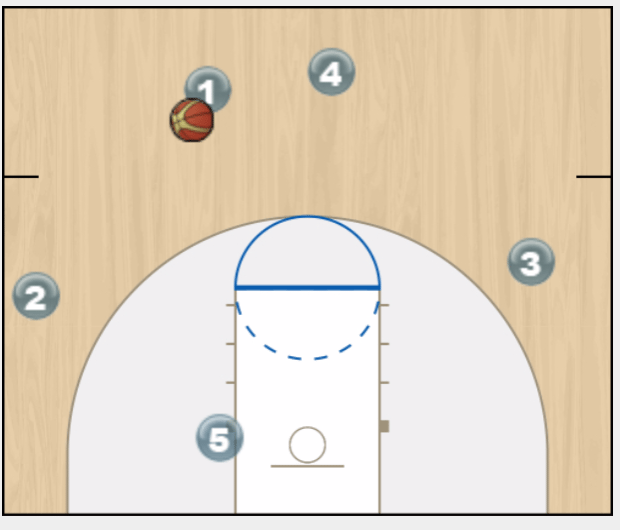
Optimizing the High-Post Hub: Implementing the Scissor Cut with Weakside Counter Actions
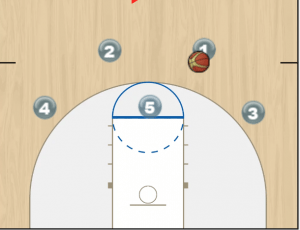
When executing a half-court offense against disciplined man-to-man defenses, creating structural advantages through player movement and screen-the-screener actions is essential. The Scissor Cut High Post Play serves as an exceptional quick-hitter or entry set that stresses defensive communication, forces immediate switching decisions, and creates high-percentage looks at the rim.
The following technical breakdown outlines the execution phase of this set, specifically focusing on the third progression as illustrated in the file named “SPLIT – OPTION 3.webm”.
Phase 1: Entry and High-Post Formation
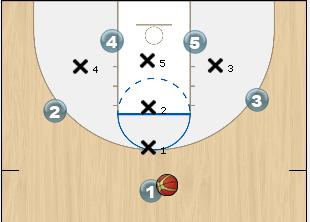
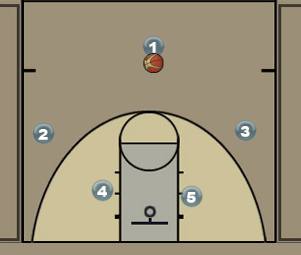
The set initiates from a standard perimeter alignment designed to stretch the defense and open up the middle of the floor.
-
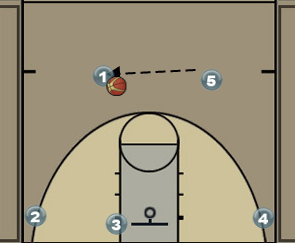
The Trigger Pass: Player 1 (Point Guard) initiates the offense at the top of the key, delivering a pass to Player 3 on the right wing.
-
The High-Post Flash: Simultaneous to the flight of the ball, Player 5 (Center) flashes hard from the low block to establish a physical anchor at the right elbow.
-
The Catch: Player 3 enters the ball directly into the high post to Player 5. Upon catching, Player 5 must establish a strong pivot base, keep the ball chin-high to prevent baseline strips, and act as the primary distributor.
Phase 2: The Scissor Split (Primary Options)
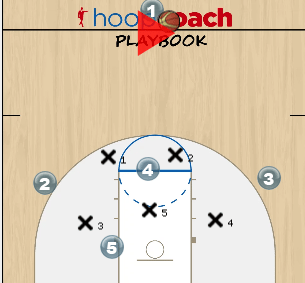
The moment Player 5 secures possession, the perimeter players execute the scissor action, using the high post as a moving screen.
-
Option 1 (First Cutter): Player 1 cuts tightly off the high side of Player 5, searching for a quick hand-off or a pocket pass. Player 1 must execute a sharp angle to rub off their defender against Player 5’s hip.
-
Option 2 (Second Cutter): Immediately following Player 1, Player 2 arcs from the opposite slot, slicing over the top of the post to complete the scissor movement.
If the defense fails to communicate the switch or over-commits to the perimeter, Player 5 has immediate targets diving directly down the lane line.
Phase 3: The Weakside Flex Counter (Option 3 Breakdown)
Against high-level defensive units that successfully sink into the paint to choke off the primary scissor cutters, the offense must seamlessly transition into its secondary counter. This exact progression is demonstrated in “SPLIT – OPTION 3.webm”:
-
The Setup: As Player 1 and Player 2 clear out through the key to balance the floor, Player 4 (on the left wing) reads the help-side defense collapsing.
-
The Flex Screen: Player 4 drops down into the low-post area to set a firm, stationary flex screen on the baseline.
-
The Baseline Cut: Player 3—the initial wing passer—recognizes the screen, plants, and changes direction, cutting hard along the baseline underneath the basket utilizing Player 4’s block.
-
The Execution: Remaining patient at the elbow, Player 5 pivots toward the weak side, reads the trailing defender, and delivers a precise, timed pass to Player 3 for a high-percentage baseline layup.
Key Tactical Coaching Points
-
Spatial Discipline: The cutters must clear the paint entirely if they do not receive the ball. If Player 1 or Player 2 linger in the lane, they will drag extra defenders into the path of Player 3’s baseline cut.
-
Screening Angles: Player 4 must hunt contact and establish legal position on the flex screen. A poor screen allows the defender to slide under, effectively killing the timing of the play.
-
Patience at the Hub: Teach your high-post player (Player 5) to play with poise. Rushing the pass before the flex screen develops leads to turnovers. They must read the floor and manipulate the defense with head and ball fakes.
Here is the animation of the ===> Scissor Cut Play