
Line Battle Drill
Competitive footwork and ball handling drill. The offensive player must stay in between the lane line and gets a point for every time they cross the free throw line or the baseline.
Competitive footwork and ball handling drill. The offensive player must stay in between the lane line and gets a point for every time they cross the free throw line or the baseline.
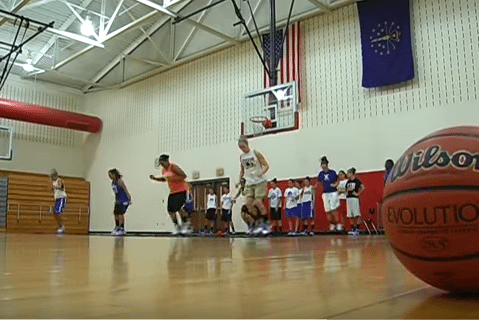
Nice video from the Indiana Explosions girls AAU basketball program with some basketball agility drills using ladders. I imagine you could tape the floor off just as easy. Might even work a little better……aside from the clean up. 🏀 Free Plays and Drills 👇 see past :30 Timeouts Email
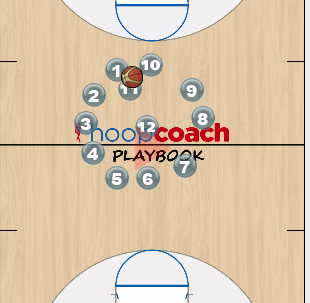
Circle Pressure Passing Drill is a fun, competitive keep away drill designed to teach players to pass under pressure but also to work in tandem with a teammate to force turnovers. Players line up around the circle at mid court then take at least one step back. Two players are designated as defenders and go…

FIBA Clinic with drills for guards and basketball fundamentals by Coach Igor Kokoskov. Video has many drills that can be added to your practices and workouts. 🏀 Free Plays and Drills 👇 see past :30 Timeouts Email
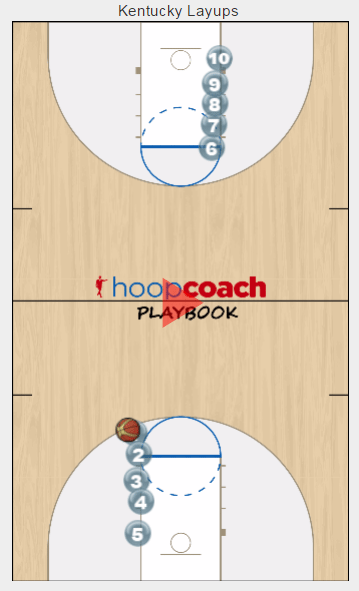
Kentucky Layups is a competitive full court layup drill that works on long passes, full court dribbling and of course, making layups. Split your team in half and line them up at opposite elbows on opposite ends of the floor facing the far basket like image. The first player dribbles the length of the floor…
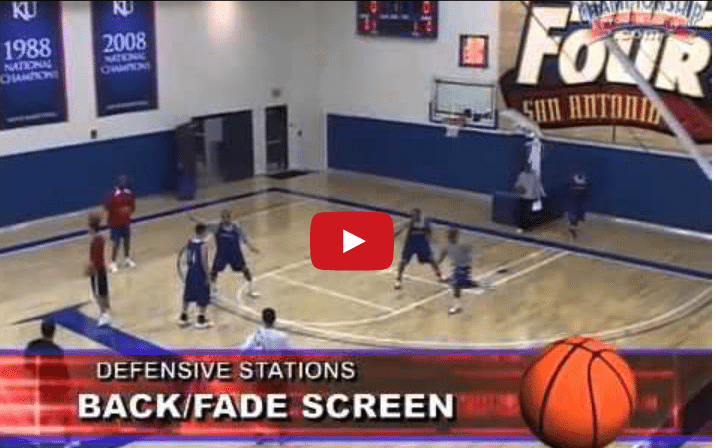
Inside look at Kansas basketball practice with Head Coach Bill Self. Coach Self takes his team through a circuit of defensive station work. 🏀 Free Plays and Drills 👇 see past :30 Timeouts Email
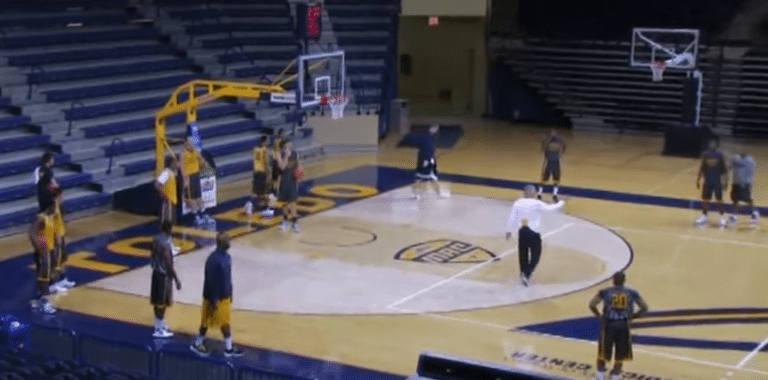
Team Passing Drill for basketball explained by University of Toledo Head Coach Tod Kowalczyk and apparently stolen from former Ohio State basketball coach Thad Matta. This passing drill for basketball requires players to pass multiple balls around in the half court without making a bad pass or dropping a pass for thirty five seconds. If there…
You must be logged in to post a comment.
Not sure that I like a defensive drill where there are no fouls, except grabbing the ball handlers head.
Good point….maybe competitive footwork drill makes more sense?
Thanks for the feedback. We call no fouls in practice. This establishes a competitive mindset and maximizes time-on-task by not having to slow down for things like fouls and out of bounds. Common sense is the prevailing theme. If you know it will be 100% a foul in a game then it makes no sense to do it in a practice. That is what the “phrase don’t get grab the head” means. It is a reference to common sense and I should have explained that better. I feel it is very important for coaches to decide (and communicate the decision) when they are running development drills and when running competitive drills. This is a competitive drill. This is because a coach needs to prepare their team to face the toughest possible challenges and situations (if a team’s own coach does not provide its biggest challenge, then an opposing coach and team will do it). So we do a lot of competitive drills where there is physicality and competition. If you expect physical play in games (especially as the season draws to a championship) then there need to be physical play in regular practices, therefore encourage lots of contact and competitive. By the way this philosophy clearly needs to be age appropriate but at all levels I have coached I have approached this drill and a competitive philosophy the same way.